

;%20stroke-width:%200px;%20}%20%3c/style%3e%3clinearGradient%20id='linear-gradient'%20x1='114.67'%20y1='158.28'%20x2='39.29'%20y2='21.4'%20gradientUnits='userSpaceOnUse'%3e%3cstop%20offset='0'%20stop-color='%230578a0'/%3e%3cstop%20offset='1'%20stop-color='%2305a0a0'/%3e%3c/linearGradient%3e%3c/defs%3e%3cg%20id='Layer_1-2'%20data-name='Layer%201'%3e%3cpath%20class='cls-1'%20d='m104.99,99.56c12.83-6,29.05-20.09,29.05-46.66C134.04,24.03,113.7,0,75.95,0H0v105.03l31.49-39.84-.55-5.04,2.3-3.9.45-.22s-1.8-11.45,5.36-18.88c.13.02,30.4,10.1,45.68,42.53,0,0-6.64,6.73-16.97,6.58l-.12.41s-2.25,1.93-3.52,2.31c-.75-.17-6.28-.1-6.28-.1l-8.96,6.95,29.71,58.24h55.67l-29.29-54.52Zm-8.39-41.88s0,9.73-8.29,18.43c0,0-10.56-30.32-47.39-42.36,0,0,15.1-17.26,38.89-6.38.92.63,18.2,7.41,16.79,30.31Z'/%3e%3c/g%3e%3c/svg%3e)
How ReString Appalachia, a nonprofit music venue, built a home base for Western North Carolina musicians
After Hurricane Helene, a Marshall, North Carolina nonprofit set out to rebuild the local music economy. We built their membership, programming, volunteer and gig-placement tools with them, one working session at a time.
The short version
ReString Appalachia helps working musicians in Western North Carolina find paid gigs, and the gear and support to play them. They are a venue, a booking agent and a music shop at once, and no tool fit all three. Since July we have met with Executive Director Nicholas Edward Williams and Chief Marketing Officer Justin Forrest five times, and built the Hub around how they actually work: tiered memberships with real discounts at the register, programming nights that never get lost behind ticketed shows, and placements that send musicians to other people's rooms without taking a cent. Their room opens October 31. We will update this story with what they learn.
About ReString
A nonprofit music venue, keeping the music going
After Hurricanes Helene and Milton in 2024, Appalachian musicians lost more than gear. Instruments are how many of them earn a living, and how they stay tied to a tradition that runs back generations. Tourism dried up, gigs went with it, and more players took to busking than anyone could remember. Many had the talent but not the contacts: booking in the mountains runs on email and relationships, and if you do not know who to call, you do not play.
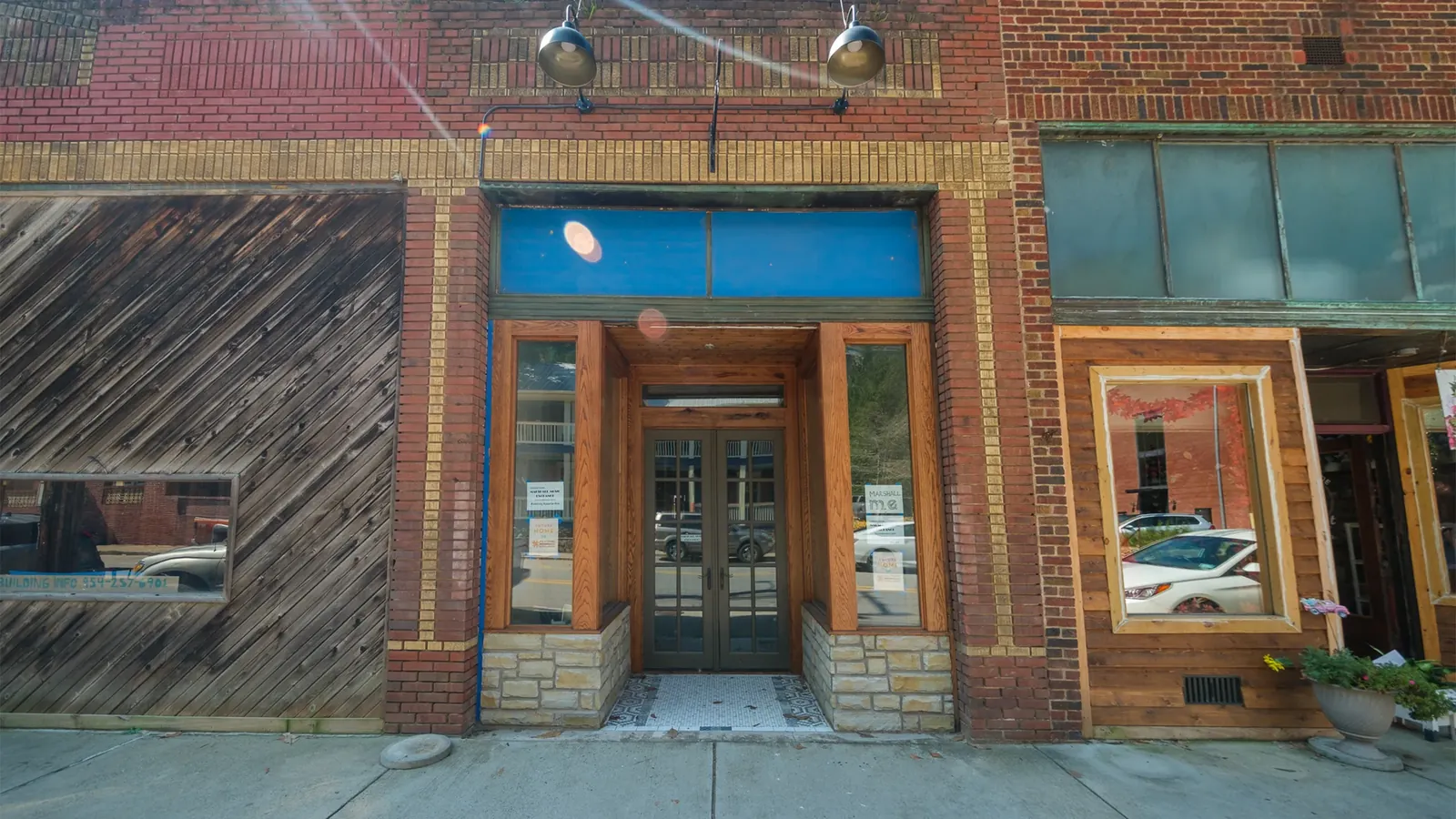
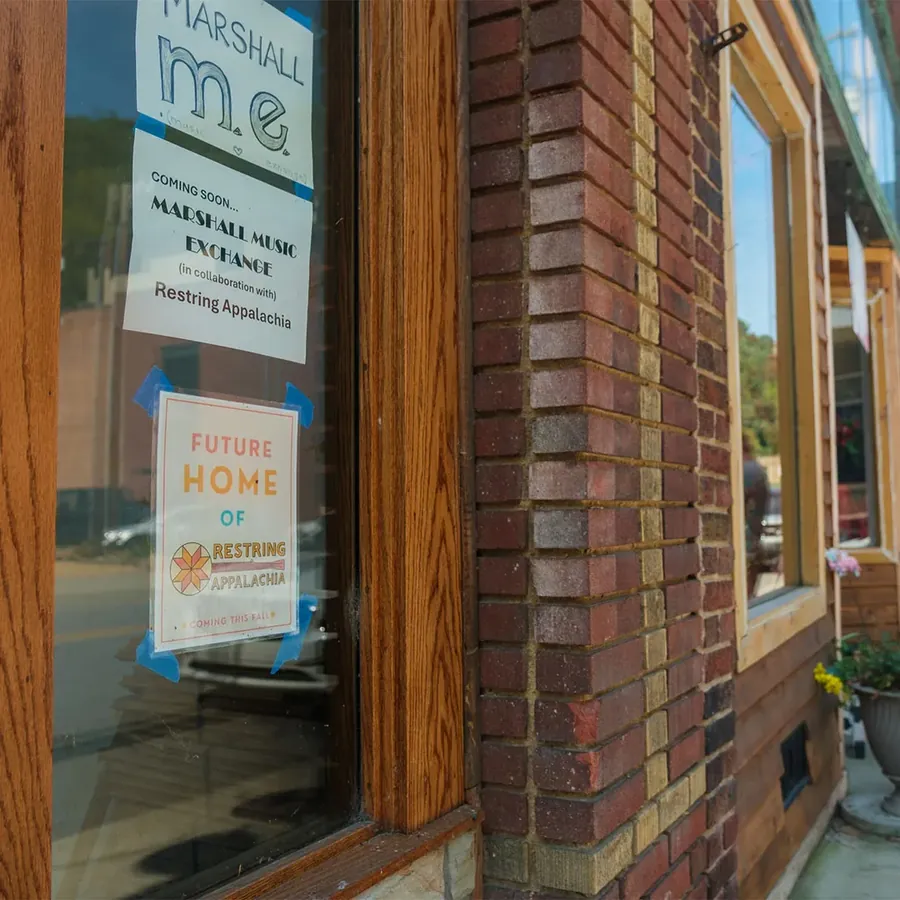
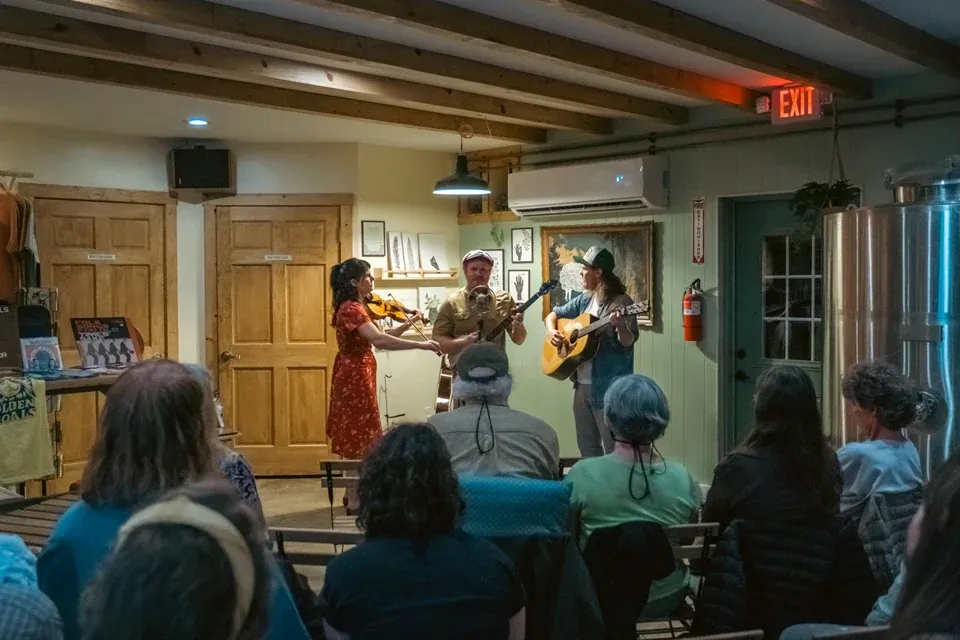
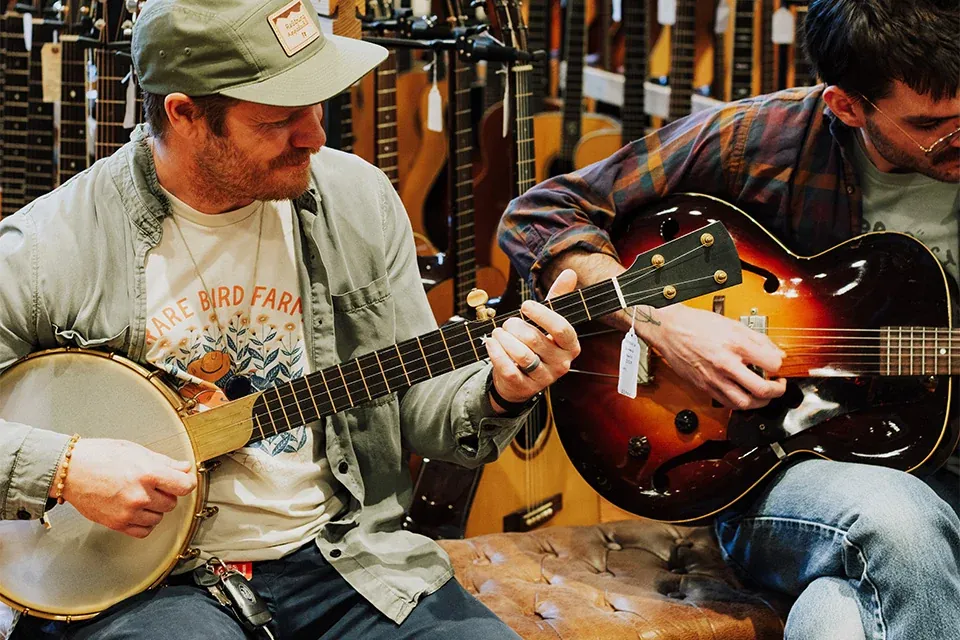
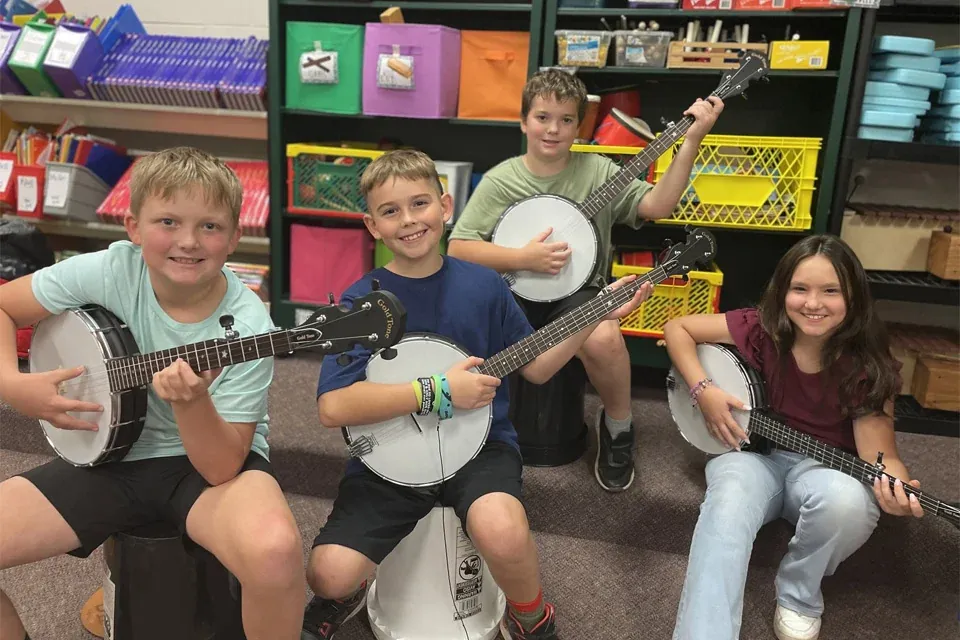
ReString Appalachia started by putting instruments back in musicians' hands. Their next step is a place to gather: the Marshall Music Exchange, a music shop with a performance room, the ReString Hub, opening October 31, 2026 on Main Street in Marshall. Membership is free. Depending on the tier, it brings 20 to 75% off instruments, strings and repairs, plus an instrument library, photo and video sessions, workshops, and for professional members, a place on the roster ReString uses to recommend musicians to venues across the region.
When a venue asks for, say, an acoustic singer-songwriter on a Friday, Nicholas sends a few names. Nobody pays for that. Not the venue, and not the musician.
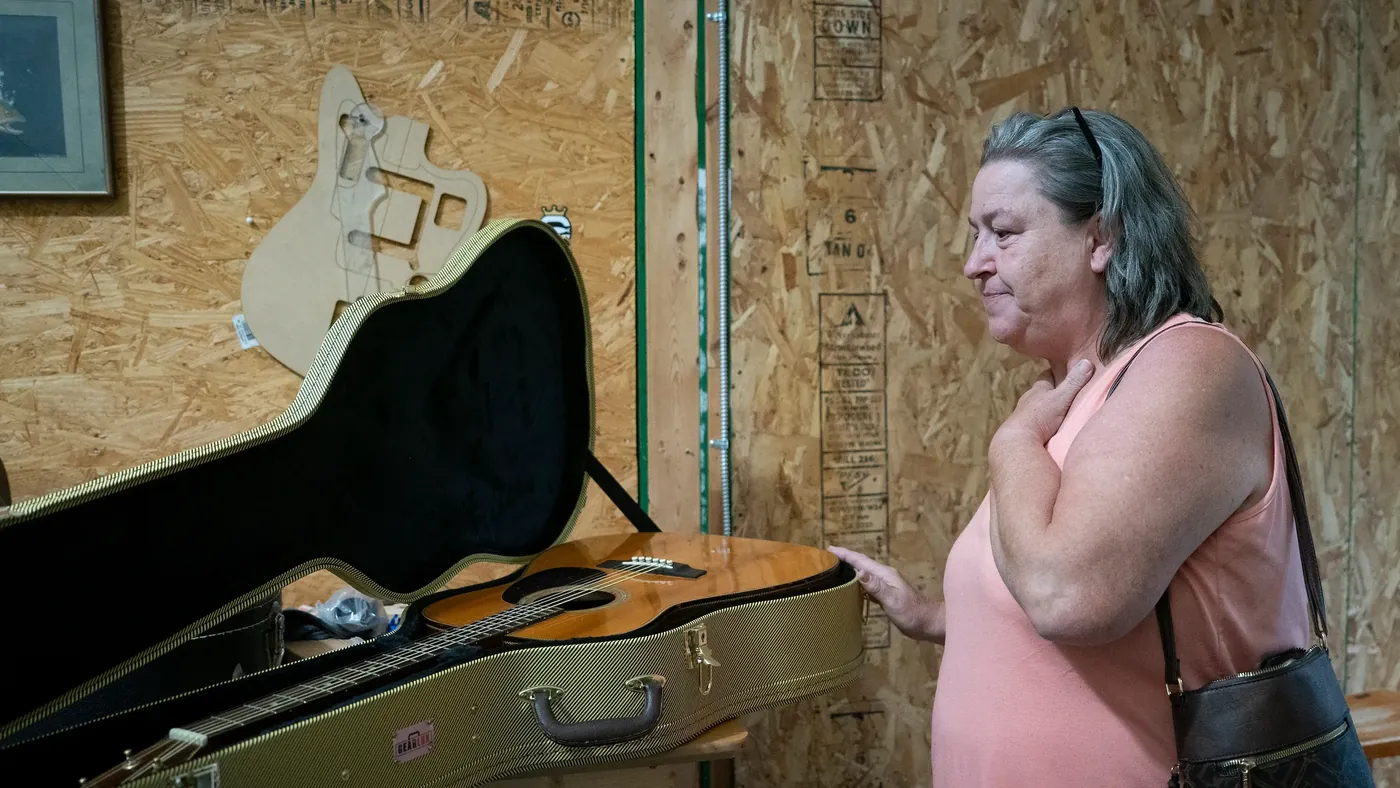
We started after Hurricane Helene, giving instruments back to musicians that lost them. There are so many more ongoing needs that musicians face in a post-disaster zone like Western North Carolina, where it's going to be years until tourism is restored, until musicians are paid a fair wage.
The challenge
Three jobs for one music nonprofit, and no tool built for any of them
A venue, an agent and a shop in one building. ReString runs a room, recommends musicians to other rooms, and runs a membership program that a cash register has to honor. Software exists for each of those jobs. Software for all three, at the scale of a small nonprofit, did not.
Programming nights were invisible. Nicholas first signed up for Roadi as a venue manager, because there was no better fit. A venue account is built around ticketed shows, four to eight a month. ReString plans 10 to 12 programs a month: jams, workshops, gospel singing, open mics and trading post events, and none of them look like a show.
Everything lived in Google. Sign-ups came through JotForm and Google Forms, and matching answers across them was a chore. Nicholas was not comfortable with where that member data lived. Five years of venue contacts sat in a shared document, and some of those rooms had closed since the storm.
Funders need numbers, not anecdotes. ReString's grants depend on showing who they serve: how many musicians, how many nights, how many people came, how many volunteer hours. Pulling that together by hand eats time a small team does not have.
Right now, everything's going to Google, and I don't really feel great about that.
The partnership
Built with them, not just for them
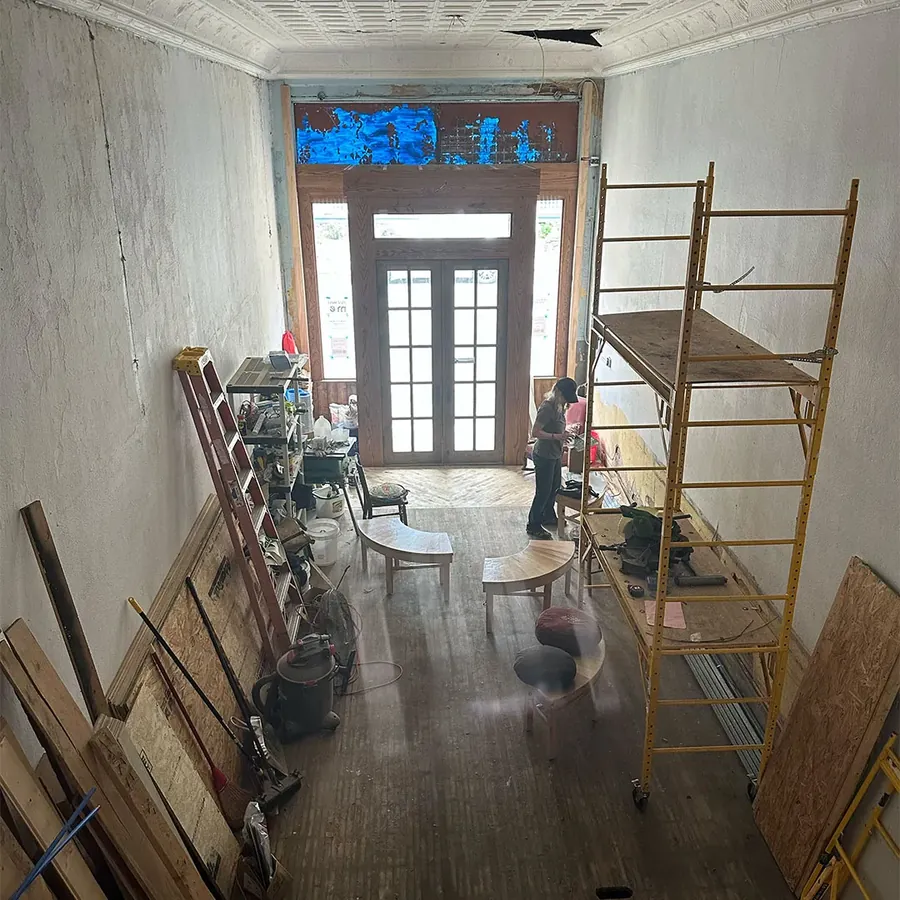
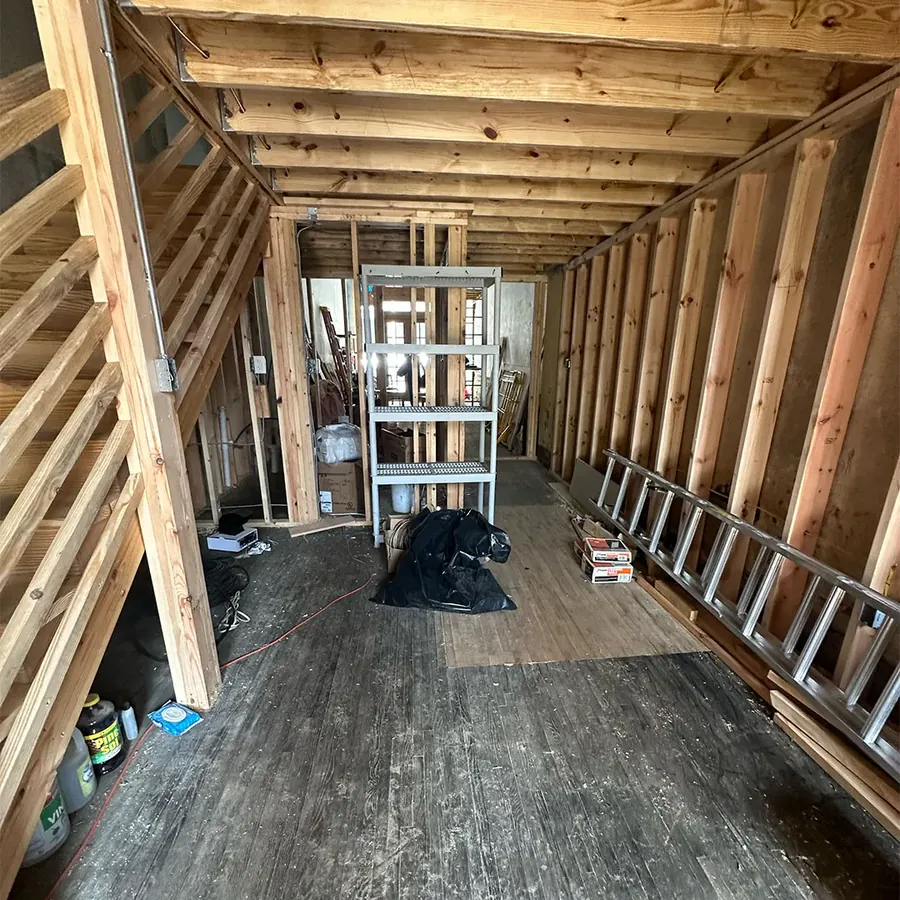
ReString is a design partner. They shaped the product as it was built, and while carpenters framed the walls on Main Street, we built the software that will run the room.
- Five working sessions between July 21 and September 29, 2026, with Nicholas, ReString's CMO Justin Forrest, and Roadi's Todd Lee and Ryan Tatum.
- Built from their own documents. Justin shared how ReString runs, and their real membership table went in exactly as they wrote it.
- A sample workspace to break. An empty account is hard to judge, so we gave them a second workspace full of sample data to test every screen before their own data moves in.
- Simple first. Both sides agreed not to build every idea at once: ship the simple version, use it, then improve it.
You didn't just take our requirements and nail them. You got inside our heads and showed us how we should be running the nonprofit.
They asked, we built
Member sign-ups that do not live in Google Forms
Forms they design in Roadi and embed on their own website, in their own colors, with every answer kept as ReString's own record
A sign-up spot in the shop that works with nobody at the counter
A kiosk mode for a tablet that clears itself after each person and keeps working when the connection drops
Member discounts of up to 75% that nobody can game
An applications queue where a person decides every tier. Roadi suggests one, but never picks it
Proof that members keep showing up
Check-ins and headcounts on every night, ready for a grant report
Five years of venue contacts in one place
My Network: import a spreadsheet or sync a Google Sheet, without overwriting anything
Pro members who need to be bookable
A free Roadi indie band account for every Pro member, started from their sign-up answers
Why we built it
What we built for ReString is now open to every music nonprofit on Roadi.
We will say it plainly: we love what ReString does. A small team in a mountain town looked at what a hurricane did to its musicians and decided the answer was to keep them playing. Then they went and did it, one instrument and one gig at a time.
Roadi exists to make live music work for the people who make it, starting with the independent musicians who carry it. ReString is that same mission with a storefront on Main Street. When Nicholas first signed up, the closest thing we had was a venue account, and it did not fit. So instead of asking ReString to bend around our software, we built them a nonprofit account shaped around how they actually work.
Everything we built with them is now the foundation of Roadi for music nonprofits. A community music space, an arts council or a musician relief group that signs up today gets everything we built with ReString from day one. ReString made Roadi better for every nonprofit that comes after them.
How it works
The software ReString runs its music nonprofit on
One account for the whole operation: the members, the room, the shop counter, the crew and the musicians they send out into the region.
Membership and applications
Membership tiers, and a person decides every one
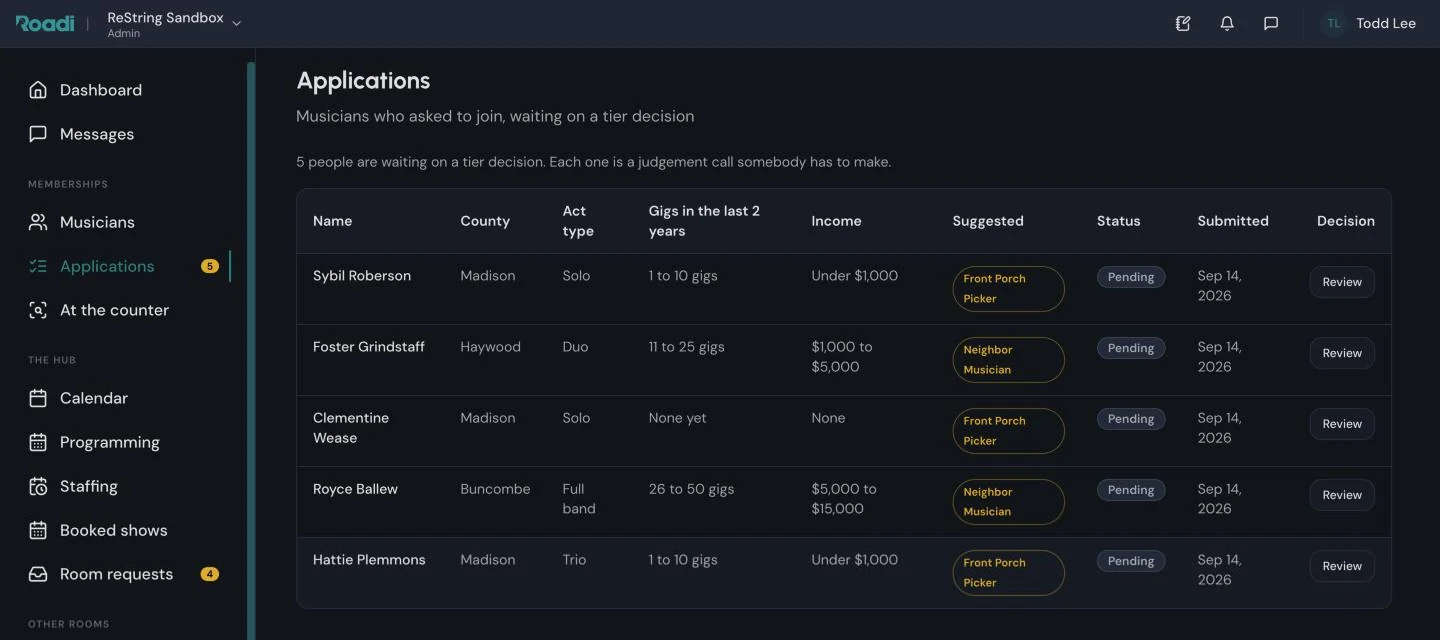
Musicians apply through a form on ReString's website or a tablet in the shop. Each application lands in a queue with the person's answers beside it.
Roadi suggests a tier from those answers, but a staff member always makes the call. Both the suggestion and the decision are kept, along with who made it. ReString's 13 member benefits are theirs to edit: add, rename or retire one in Settings and it changes on every tier at once.
Programming and attendance
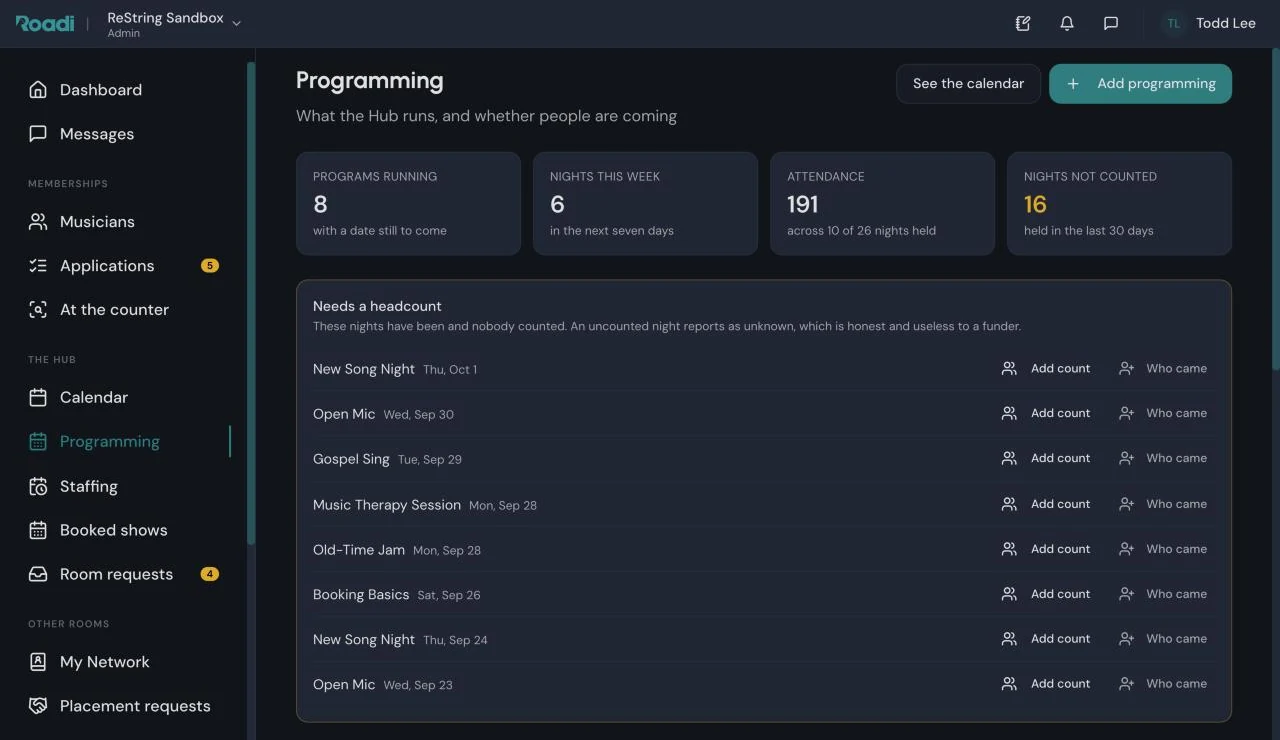
Programming and attendance: 10 to 12 programs a month, none lost
Jams, workshops, sessions and rehearsals get their own calendar, separate from ticketed shows and free of deal terms. A weekly series can be changed one night at a time.
Staff type a headcount or check people in by name from a phone, with regulars listed first. Roadi records whether a night was counted at all, so "nobody came" and "nobody counted" never look the same in a report.
At the counter
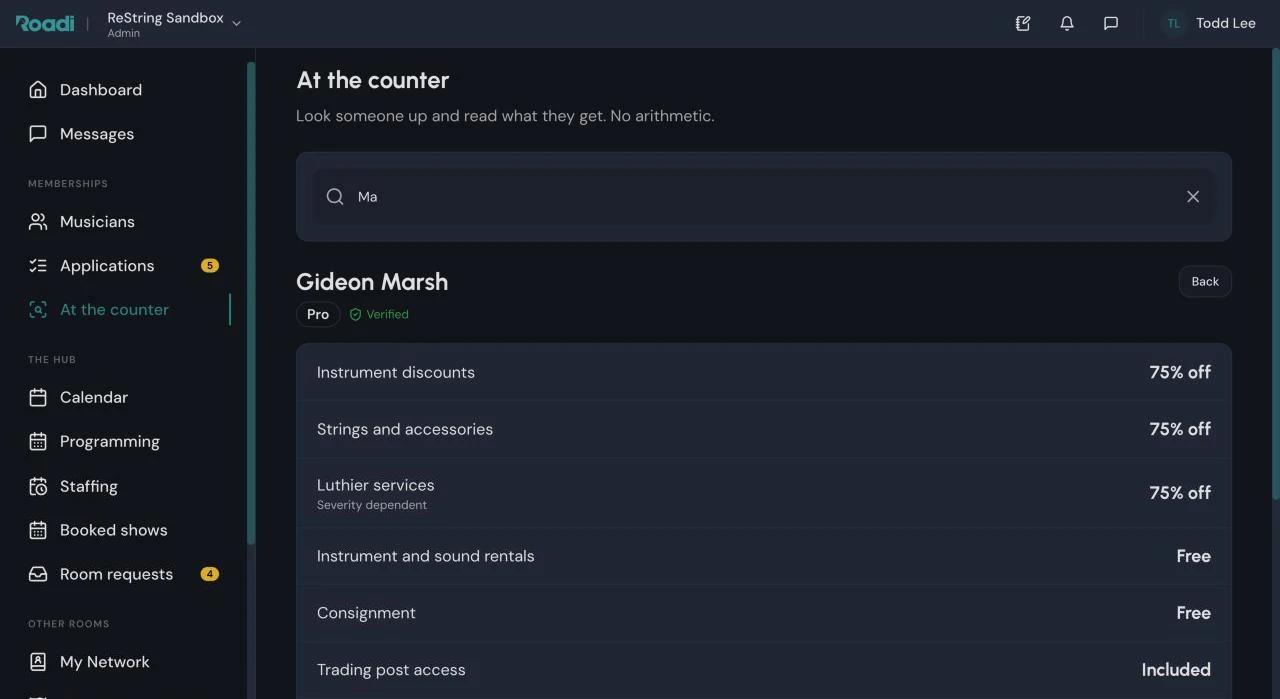
The discount, as a number
At the register, staff search a member by name and see the discount as a number. If someone has no tier yet, the screen says so plainly: charge full price and let the office know.
Volunteers can use it without being able to browse the member list.
Staffing and volunteers
Volunteer scheduling on one board
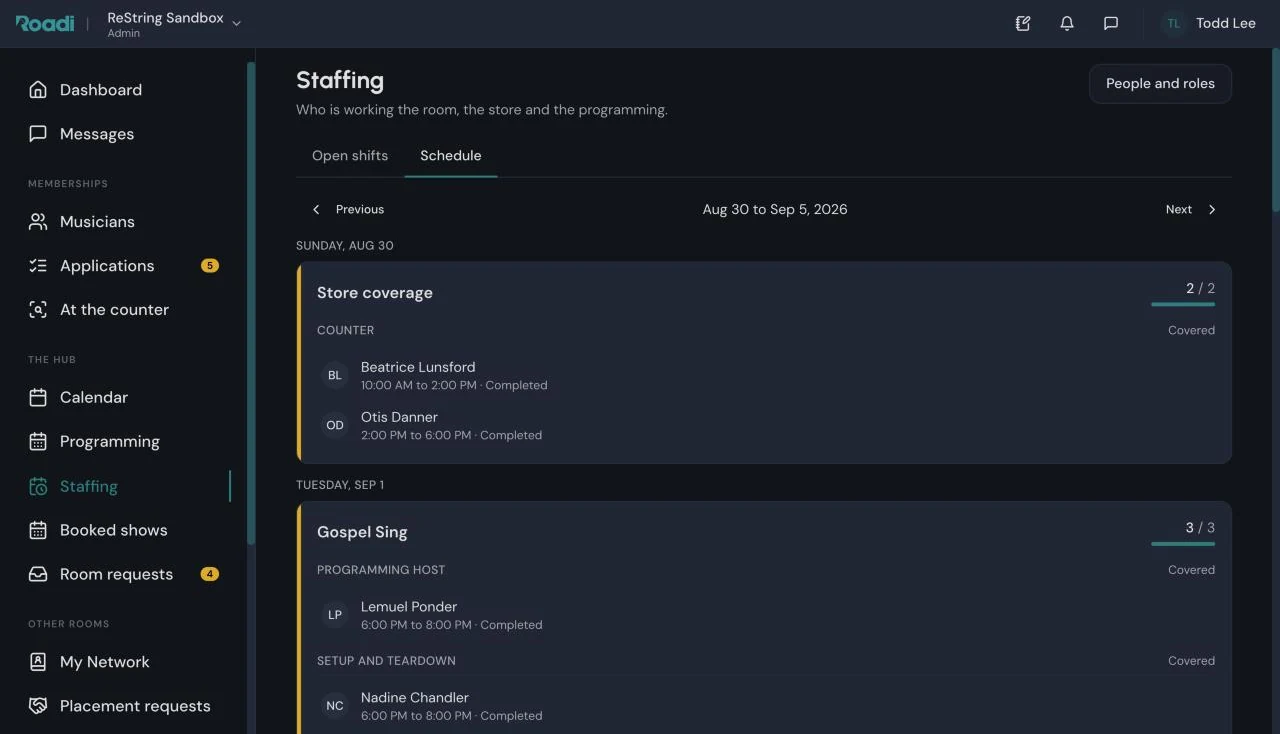
Shop coverage, event shifts and appointments live on one board. Volunteers claim open shifts, and Roadi warns about clashes before they happen.
Volunteer hours and paid hours are tracked separately and never added together.
My Network and placements
Booking local musicians, with no commission
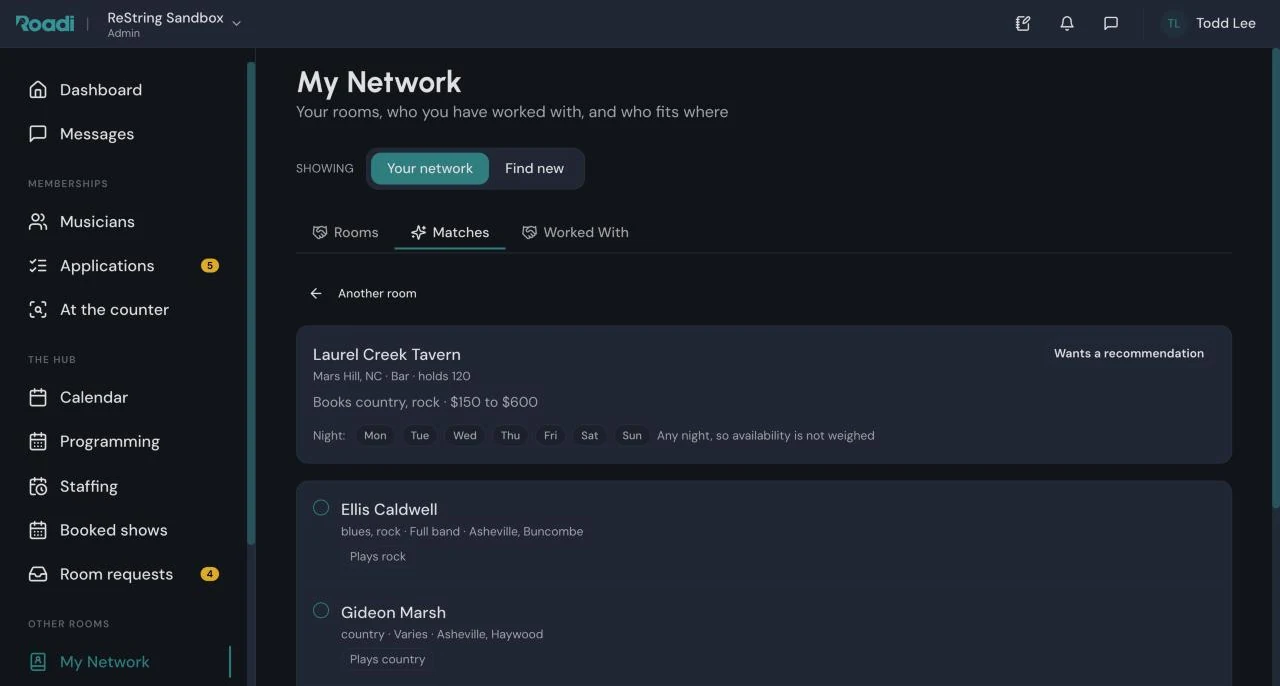
Every venue in ReString's network, with its contacts and its history, in one place. When a room asks for a musician, Matches ranks Pro members who fit, with the reasons and the drive time, and Nicholas decides who to send.
Only verified Pro members can be placed. A shareable roster link shows only musicians who said yes to being listed, with no phone numbers or emails.
Every member can also read Roadi's free guides for working musicians, like how to book shows and going from free shows to paid ones.
Impact reports
Impact reports a funder can trust
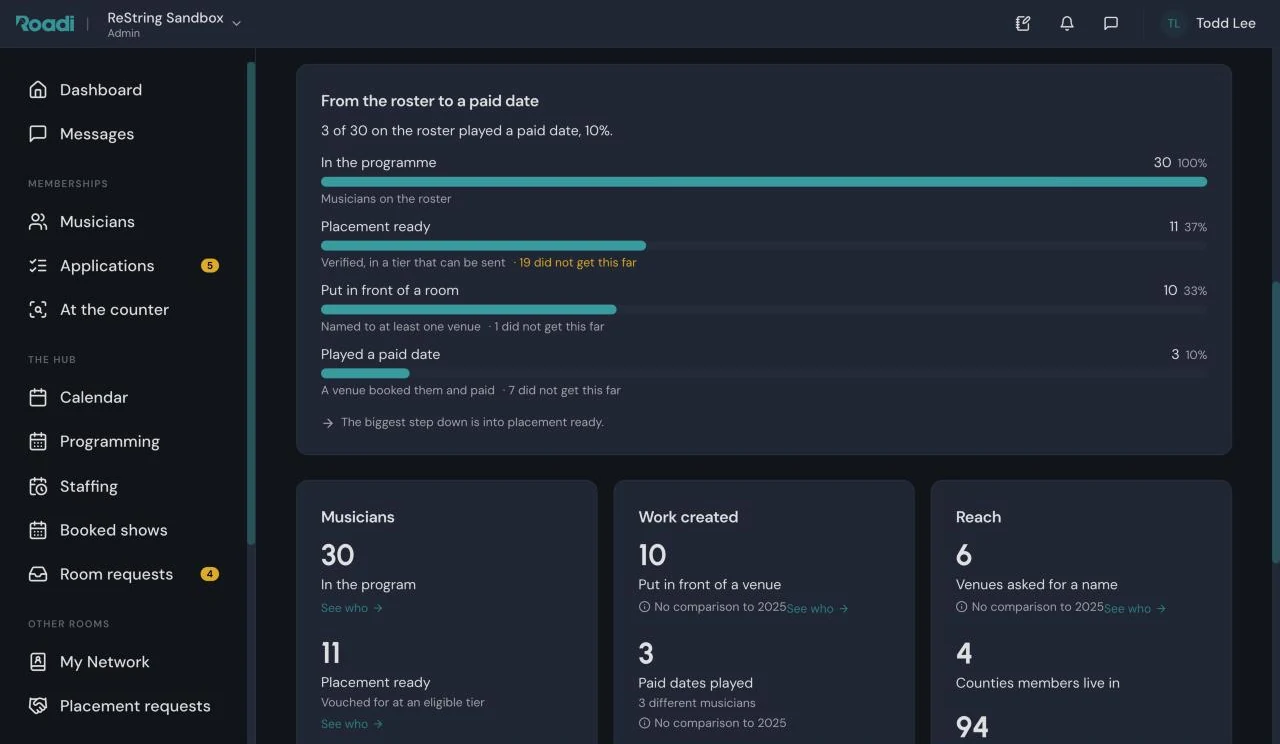
Eight reports built for funders: placements, musician pay, roster growth, volunteer hours, geography, barriers, instrument assistance and participants.
Every figure shows what it was counted from, and every export says where the numbers came from.
For ReString's Pro members
Every Pro member gets a free Roadi indie band account
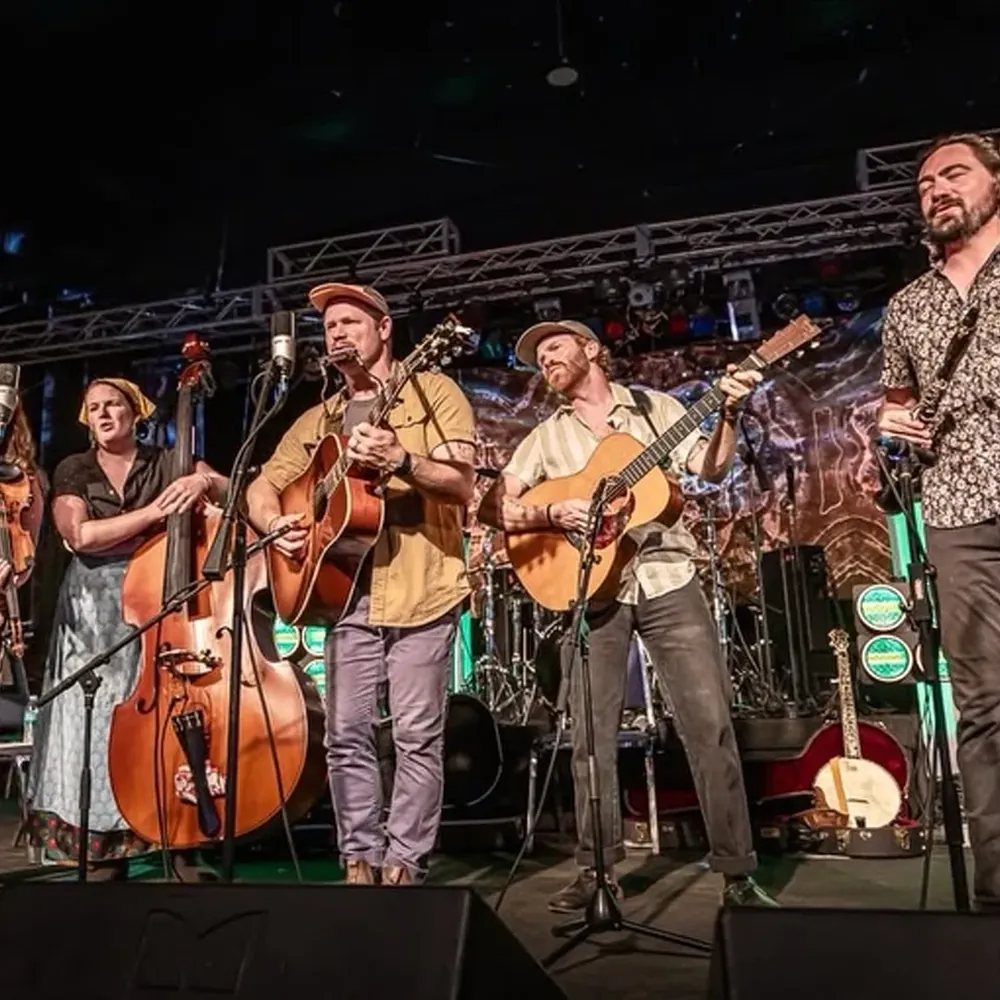
When ReString approves a musician for its Pro tier, Roadi sets them up with their own indie band account, started from the answers they gave when they joined. They set a password and they are in, with the same booking, advancing and settlement tools independent bands use across Roadi. For ReString, it means every musician they vouch for walks away with real business tools, not just a discount.
We don't want to hand everything on a silver platter. We want them to build up their own sustainable music careers, but we're going to give them a lot of resources to do that.
A press kit at its own link
Bio, photos, tech rider and music on one page they can drop into any email to a venue.
Book their own shows
Every outreach, hold, offer and confirmed date on one calendar, instead of in a notebook and three inboxes.
Advance every show
Contacts, load-in, set times, rider and hospitality, agreed with the venue before the day.
Settle with the same numbers
The venue and the band see the same settlement, with the same math, at the end of the night.
Split the money fairly
What each member earned per show, worked out for them, uneven cuts and expenses included.
Know what they earn
Profit and loss by show, tour and town, so they know which rooms are worth going back to.
Their data, theirs to take
Everything exports. A musician can hand it to an accountant or leave with all of it.
Free, for good
Independent bands never pay for Roadi. No credit card and no trial that runs out.
See everything an independent band gets on Roadi for indie bands.
Venues in ReString's network get Roadi free for 4 months
If you run a room ReString sends musicians to, a cafe, a brewery, a bar or a listening room in Western North Carolina, your first four months of Roadi are on us. It is the same venue management and booking software independent rooms use across Roadi, and it puts you one message away from the musicians ReString vouches for.
Musicians ReString vouches for
Need someone for a Friday? Ask ReString and they recommend verified Pro members who fit your room, with no booking fee.
Holds and offers on one calendar
Every hold, offer and confirmed night in one place, so nothing is double booked or lost in a text thread.
Settle the night together
Door deals and flat guarantees, box office reconciled, with the band seeing the same numbers you do.
Know what each show made
Profit and loss for every show, so you know which nights to book again.
Run the night from your phone
Day-of-show details on a phone: who is playing, when they load in and what was agreed.
Your whole staff, no extra seats
Unlimited shows and unlimited seats. Bartenders, sound and the booker all work from the same plan.
Choose "Venue" and tell us your room. We confirm you are in ReString's network and set you up. See everything venues get or compare plans.
The offer is for venues on ReString's network list and covers every venue plan. Your four free months begin when Roadi comes out of beta, and after them your plan moves to its regular price automatically. The offer is ongoing, with no end date.
Rules we built in
What the software will not do
A nonprofit's trust is its whole business. These rules are written into Roadi itself, not left to good intentions.
ReString owns its data
Members, attendance, programming and reports belong to ReString, not Roadi. Roadi never sells them, every report exports to a spreadsheet they keep, and their money stays in their own accounts.
No commission, ever
Placements have no field for a cut, a split or a fee. A test fails the build if anyone ever adds one.
People decide, software suggests
Roadi never assigns a membership tier and never decides who is eligible to be sent to a venue.
Consent is asked, never assumed
Being listed publicly, being contacted and sharing data are three separate yeses, and each one starts as no.
Volunteer time is not paid time
Volunteer hours and paid hours are tracked side by side and never added together in any report.
Nothing quietly disappears
A cancelled night stays on the calendar, struck through. An archived member still counts in past reports.
Before and after
Where the work lives now
| Task | Before | With Roadi |
|---|---|---|
| Member sign-up | JotForm and Google Forms, matched up by hand | One form on their website, a tablet in the shop and a QR code, all landing in one queue |
| Deciding a member's tier | Case by case, with no record of who decided | An applications queue that keeps the reviewer's name on every decision |
| Discounts at the register | Memory and a printed list | A counter lookup that shows the discount as a number |
| Programming nights | Squeezed into a calendar built for ticketed shows | Their own calendar, with attendance on every night |
| Venue contacts | A shared document five years in the making | My Network, with contacts, history and duplicates merged |
| Recommending musicians | Search the notes, then write the email | Matches ranks members who fit a room, and Nicholas picks |
| Grant numbers | Pulled together by hand at report time | Eight reports, with exports that show where every number came from |
Member sign-up
Before
JotForm and Google Forms, matched up by hand
With Roadi
One form on their website, a tablet in the shop and a QR code, all landing in one queue
Deciding a member's tier
Before
Case by case, with no record of who decided
With Roadi
An applications queue that keeps the reviewer's name on every decision
Discounts at the register
Before
Memory and a printed list
With Roadi
A counter lookup that shows the discount as a number
Programming nights
Before
Squeezed into a calendar built for ticketed shows
With Roadi
Their own calendar, with attendance on every night
Venue contacts
Before
A shared document five years in the making
With Roadi
My Network, with contacts, history and duplicates merged
Recommending musicians
Before
Search the notes, then write the email
With Roadi
Matches ranks members who fit a room, and Nicholas picks
Grant numbers
Before
Pulled together by hand at report time
With Roadi
Eight reports, with exports that show where every number came from
Run a music nonprofit?
See what the Hub could do for yours, with or without a room of your own.
By the numbers
What this nonprofit music venue has in place for opening day
Setup, not results
- working sessions, July to September
- 5working sessions, July to September
- membership tiers, entered as ReString wrote them
- 4membership tiers, entered as ReString wrote them
- member benefits, each one editable
- 13member benefits, each one editable
- programs a month the Hub is built to carry
- 10-12programs a month the Hub is built to carry
- funder-ready impact reports
- 8funder-ready impact reports
- commission on every placement
- 0%commission on every placement
What's next
The road to opening night, and past it
July 21, 2026
First working session
Nicholas walks us through the membership program, the room and the venue network.
August 2026
The nonprofit account takes shape
Membership, programming, consent, check-ins and grant tracking, built around ReString's real tier table.
September 14, 2026
The Hub is handed over
ReString takes ownership of their account, with a sample workspace beside it to test every screen.
October 2026(planned)
Member sign-ups go live
On ReString's website, on a tablet in the shop and from a QR code in the window.
October 31, 2026(planned)
The ReString Hub opens
38 S. Main Street, Marshall, North Carolina.
Spring 2027(planned)
The booking push
Members and venue contacts settle in over the winter, then ReString aims for 50 venue relationships.
Connected to the shop register
ReString's Square register is connected to Roadi, so purchases and member discounts land right beside each member's record.
What they will measure
Members by tier, nights held and the people who came, volunteer hours, musicians placed, and what those musicians were paid.
We will update this story after ReString's first 90 days open, with what worked, what did not, and what we changed.
I really only work with people and organizations that are in direct alignment and resonate with us. And I feel like there are so many people that could benefit from using a platform like this.
Questions from music nonprofits
What organizations like ReString ask before they move onto Roadi.
What is a nonprofit music venue?
Is there software built for music nonprofits?
Who owns the data, the nonprofit or Roadi?
Do a nonprofit's members get their own Roadi account?
How does a venue in ReString's network get 4 months free?
Does Roadi take a cut when a nonprofit places a musician?
Can members sign up from our own website?
Can volunteers use Roadi without seeing member details?
Does Roadi replace our accounting or donor software?
Is this only for nonprofits with their own room?
Building something like ReString?
We build Roadi with the people who use it. If you run a music nonprofit, an arts council or a community music space, let's talk about yours.