It Takes a Village to Put on a Show. The Village Has No Town Square.
Every person working a live music event is pointed at the same outcome. But almost none of them are working from the same information, and the industry built no shared infrastructure to change that.
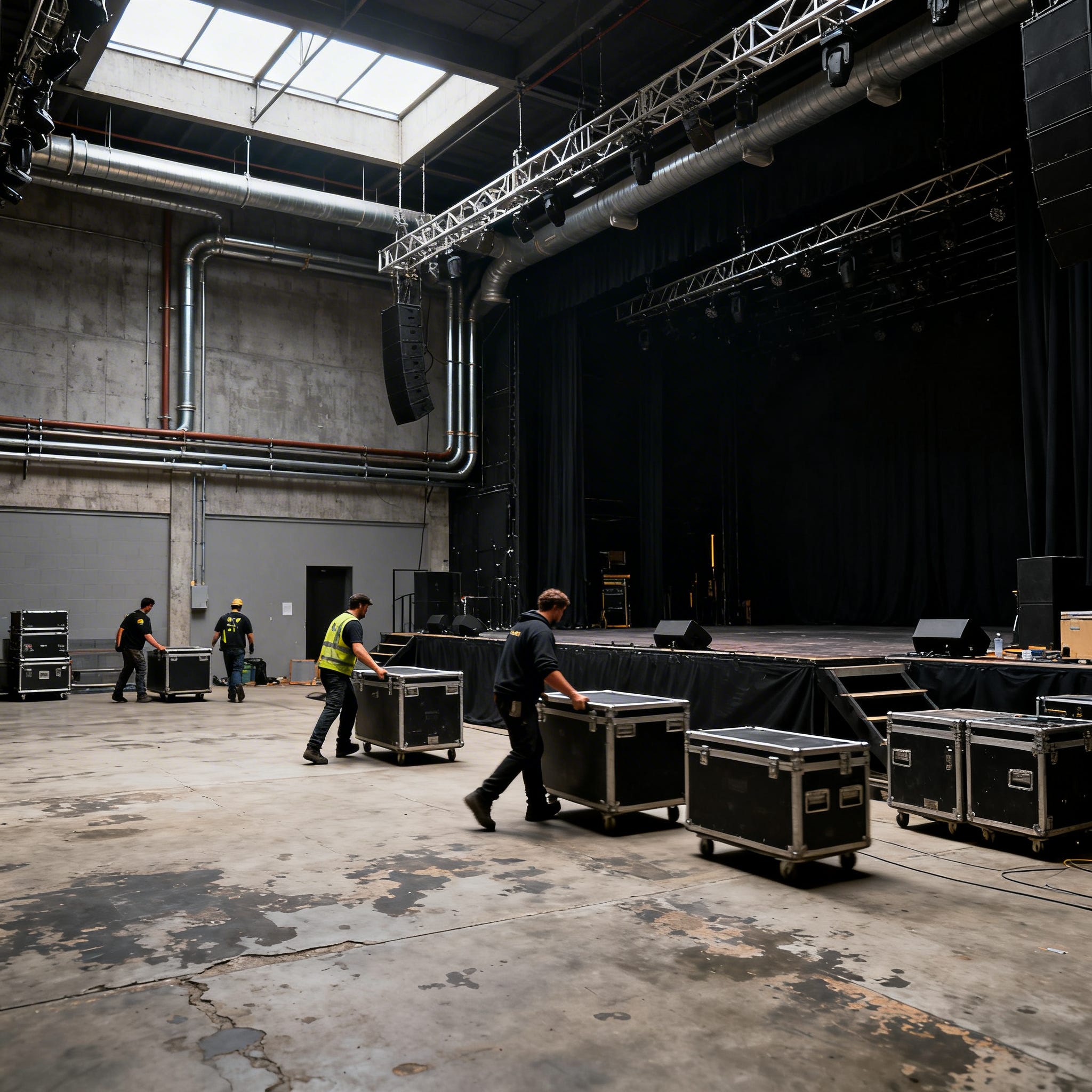
Every person who has ever worked a live music event knows the list. The band. The venue. The promoter. The booking agent. The production manager. The stage manager. The door staff. The hospitality coordinator. The tour manager. The technical director. The load-in crew. In a larger operation, add a few more. In a smaller one, some of these roles collapse into the same exhausted person.
Every one of these people has a job to do. Every one of them is working toward the same outcome. A show that happens, runs well, and gets settled at the end of the night with everyone getting what they are owed.
And almost none of them are working from the same information.
This is not a staffing problem, even though it shows up as one constantly. Venues struggle to get qualified staff for events. Acts have trouble communicating what they need to the right person in a venue's chain of command. Production coordinators are chasing details from five different sources the week of a show. The booking agent who made the deal is often the least informed person in the room when the event actually happens, because the operational detail that accumulated between the offer and the show date exists somewhere they cannot see.
All of that looks like a people problem. It is actually an information architecture problem.
When the communication infrastructure around a live music event is built out of email threads and phone calls and PDFs dropped into shared drives that half the people involved cannot access, the default outcome is fragmentation. Decisions get made without full context. Requirements get missed. Costs get incurred because nobody had the information that would have prevented them. And when something goes wrong, the conversation always comes back to why didn't somebody communicate that, when the honest answer is that the system for communicating it was never there in the first place.
Staffing a live event is genuinely hard. The talent pool for qualified live music production staff is not unlimited. Experienced stage managers, skilled sound engineers, production coordinators who can handle the pace and pressure of touring work - finding those people, retaining them, and making sure they have what they need to do their jobs well is a real operational challenge for any venue running a serious calendar.
But part of what makes it harder is that every new person who comes into the chain has to be brought up to speed from scratch. There is no common record. There is no onboarding document that reflects what the act needs and what the venue has committed to providing and who is responsible for each piece. There is just whoever remembers the most details from the conversation that happened three weeks ago.
The booking side of this is its own category of dysfunction. Getting acts booked into a venue involves a negotiation that happens between the agent and the venue or promoter, and then a long chain of operational handoffs that are supposed to convert that deal into a live event. The rider has to make it to production. The financial terms have to make it to whoever handles settlement. The marketing commitments have to make it to whoever handles marketing. The guest list has to make it to whoever runs the door.
Every one of those handoffs is a point of failure. In a well-run operation with experienced staff and clear internal systems, most of them work. But every one of them is a manual transfer of information from one format and one person to another, and every transfer is a chance for something to get lost, misread, or simply never arrive.
Here is the thing that strikes me most when I look at this industry from a structural standpoint. The problems are known. Nobody is surprised by any of this. Ask a booking agent what their biggest operational frustrations are and they will describe some version of the information fragmentation problem. Ask a venue operator. Ask a road manager. Ask a promoter who has been doing this for twenty years. They all see the same picture.
What they do not agree on is whose problem it is to fix.
The venue thinks the act should be more organized. The act thinks the venue should have better systems. The promoter is trying to be the connector between two sides that should not need a human connector for basic operational logistics. The agent is playing telephone across a chain that has no shared backbone.
There are products in this market that solve pieces of this. Ticketing is relatively consolidated, though it remains expensive for independent venues. There are booking tools that help venues and promoters manage their calendars. There are contract platforms that handle some of the document management. None of them were designed to be the unified operational layer that connects all of these parties around the actual life cycle of an event, from initial offer through settlement.
The platforms that come closest to touching this problem were built for the large end of the market. Arena operations. Major festival infrastructure. The segment of the live music industry that has capital and scale and dedicated operations staff. They do not serve the independent venue running two hundred shows a year on a lean team. They do not serve the working act that plays fifty markets and needs to manage the business around that without a dedicated back-office staff. They were not designed for the middle and lower end of the market where the vast majority of live music actually happens.
That is not a small gap. That is the majority of the industry operating without the tools to do the job properly.
What this industry actually needs is not another ticketing platform and it is not another venue calendar tool. What it needs is something that connects the parties who are already doing this work and gives them a shared operational language. Something that the band and the venue and the promoter and the agent can all use without one of them having to compromise how they work to fit into a system designed for someone else.
The technology to build that has existed for years. The business model logic of building it has been available for anyone willing to look. The people who need it have been describing it out loud, in interviews and in conversations and in frustrated late-night texts to their colleagues, for a long time.
The only thing missing has been someone willing to build it for everyone in the room instead of just the most convenient side of the table.