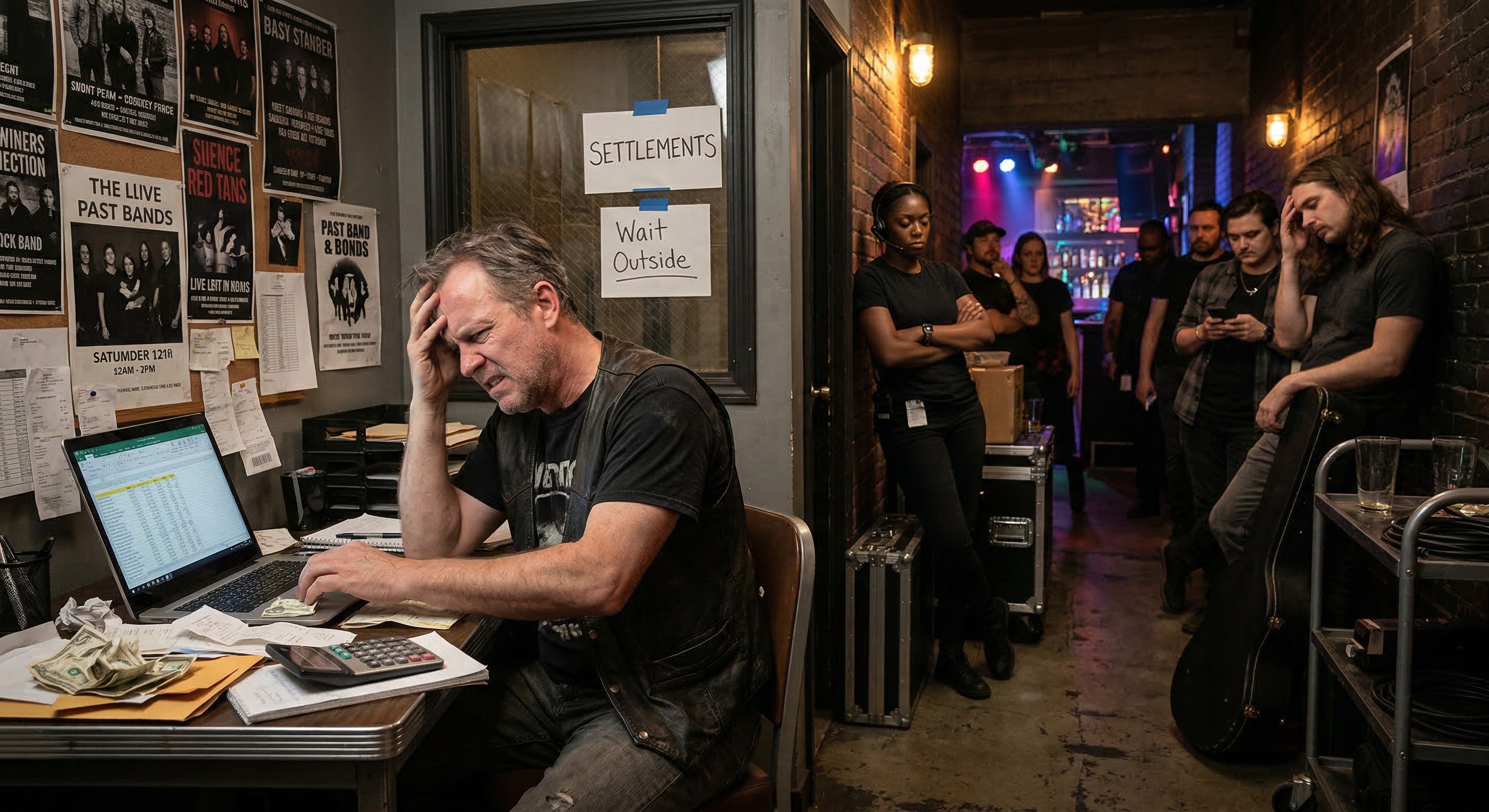
The Trust Problem Nobody in Live Music Wants to Talk About
At the end of every show, the band has to decide whether to believe the settlement number they are handed. Most of the time they take it - not because they trust it, but because they cannot verify it. That opacity is the core of live music's trust problem.
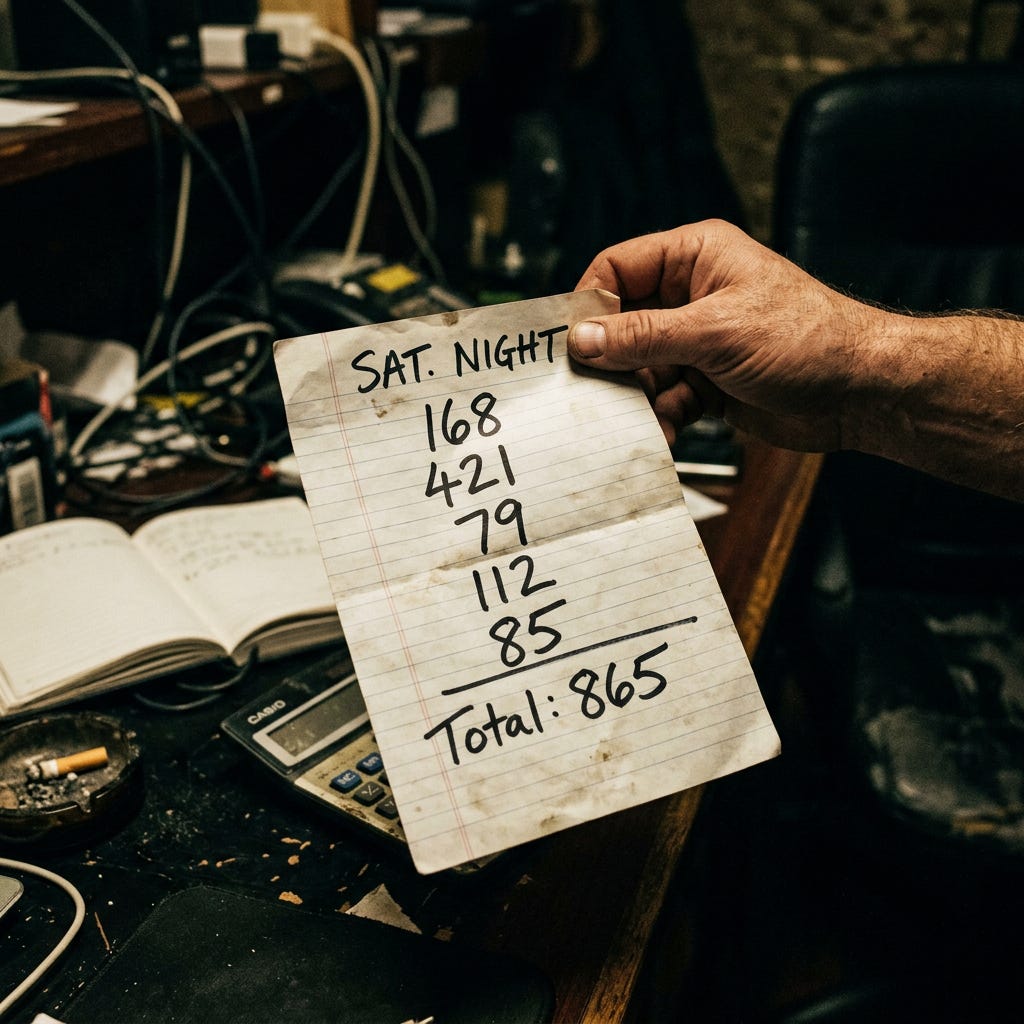
There is a moment that happens at the end of almost every show at the independent level. The crowd has gone home. The gear is getting loaded out. Somebody walks into a back office or a green room with a piece of paper and a number on it, and the band or their rep has to decide in the next few minutes whether they believe that number is true.
Most of the time they take it. They sign it or they photograph it or they just nod and move on, because the van is running and the next city is five hours away and there is not a lot of time or leverage to do anything else.
That moment, repeated thousands of times a week across every independent venue in this country, is the foundation of a trust problem that the live music industry has been living with for so long that most people inside it have stopped noticing it is there.
But it is there. And it shapes everything.
Ask any touring musician who has spent real time on the road about settlements and you will not have to wait long before a story comes out. The bar number that seemed low. The ticket count that did not match what they had been tracking at the door. The expenses that appeared on the sheet that nobody mentioned in the offer. The guarantee that was right but the backend percentage that got calculated in a way that did not quite add up.
Most of these stories do not end in accusations. Most touring musicians are not walking around convinced that venues are stealing from them. What they are walking around with is something quieter and more corrosive than that. They are walking around with the knowledge that they cannot verify any of it.
That is the real problem. Not theft. Opacity.
When you cannot see the bar revenue independently, you are trusting a number someone else generated on equipment you have never seen, using a process you were not part of, reported to you at the end of a night when everyone is tired and nobody wants a confrontation. When you cannot see the ticketing data in real time, you are trusting a count that passed through at least two sets of hands before it reached yours. When the expense line on the settlement sheet lists items that were not in the original offer, you have no record to compare it against except whatever you wrote down weeks ago in an email thread you may or may not be able to find on your phone.
None of this requires bad faith from the venue to be a problem. A honest venue with sloppy systems produces the same outcome as a dishonest one from the artist's perspective. The band still cannot verify the number. The trust still is not there. The relationship still carries that friction in it every single time.
Venue operators who care about their relationship with artists know this dynamic exists. The good ones feel it too, from the other side. They know that when a band gets quiet at settlement, it is not necessarily because the number is wrong. It is because the band has no way to know if it is right.
There is something genuinely uncomfortable about being the person holding the only copy of the financial truth at the end of a night. The best venue operators handle it with transparency, with documentation, with the kind of openness that builds a reputation over years. They show their work. They walk through the numbers. They make the band feel like a partner in the accounting, not a recipient of a verdict.
But that approach depends entirely on the individual humans in the room. It is not a system. It does not scale. It does not survive a staff change or a busy night or a venue that has four shows a week and is operating on whatever processes evolved organically over years of figuring it out as they went.
The independent venue world runs on exactly that kind of evolved, informal, human-dependent infrastructure. Which means the quality of the financial relationship between a band and a venue varies wildly from room to room, market to market, night to night. And the band, in almost every case, is the one absorbing that variance.
This is not a problem that gets solved by assuming the worst about venues. Most venues are not the enemy. Most venue operators got into this because they love music, the same way the bands did. They are running on thin margins and long hours and genuine passion for what they have built, and the last thing most of them want is for the artists coming through their room to leave feeling like they got shortchanged.
But love of music is not a financial control system. Passion does not produce an audit trail. Good intentions on both sides of a settlement table do not create the shared visibility that would let both parties walk away from a show knowing they are looking at the same truth.
That shared visibility does not exist yet at the independent level in any systematic way. And until it does, the trust problem is going to keep living in that back office moment at the end of every night, quiet and unresolved, one more piece of friction in a business that already has more than enough of it.
The artists deserve better than that. So do the venues. The relationship between them is too important to keep running on faith alone.